
Residential Air Conditioning Installation: The Complete Homeowner’s Guide
What You’re Really Getting Into
Replacing or installing central air conditioning is one of the bigger home improvement decisions you’ll make. Get it right and you’ve got a reliable, efficient system that keeps your home comfortable for 15–20 years. Get it wrong — wrong size, wrong equipment, wrong installer — and you’re dealing with callbacks, high energy bills, and a system that never quite keeps up on a 100-degree Kansas afternoon.
This guide walks you through everything: how residential air conditioning installation actually works, what affects cost, how to choose the right equipment, and what separates a good install from a bad one.
—
How Central Air Conditioning Works
A central AC system moves heat out of your home using two main components:
- The indoor air handler or evaporator coil — typically installed near your furnace, this is where warm indoor air passes over refrigerant-cooled coils
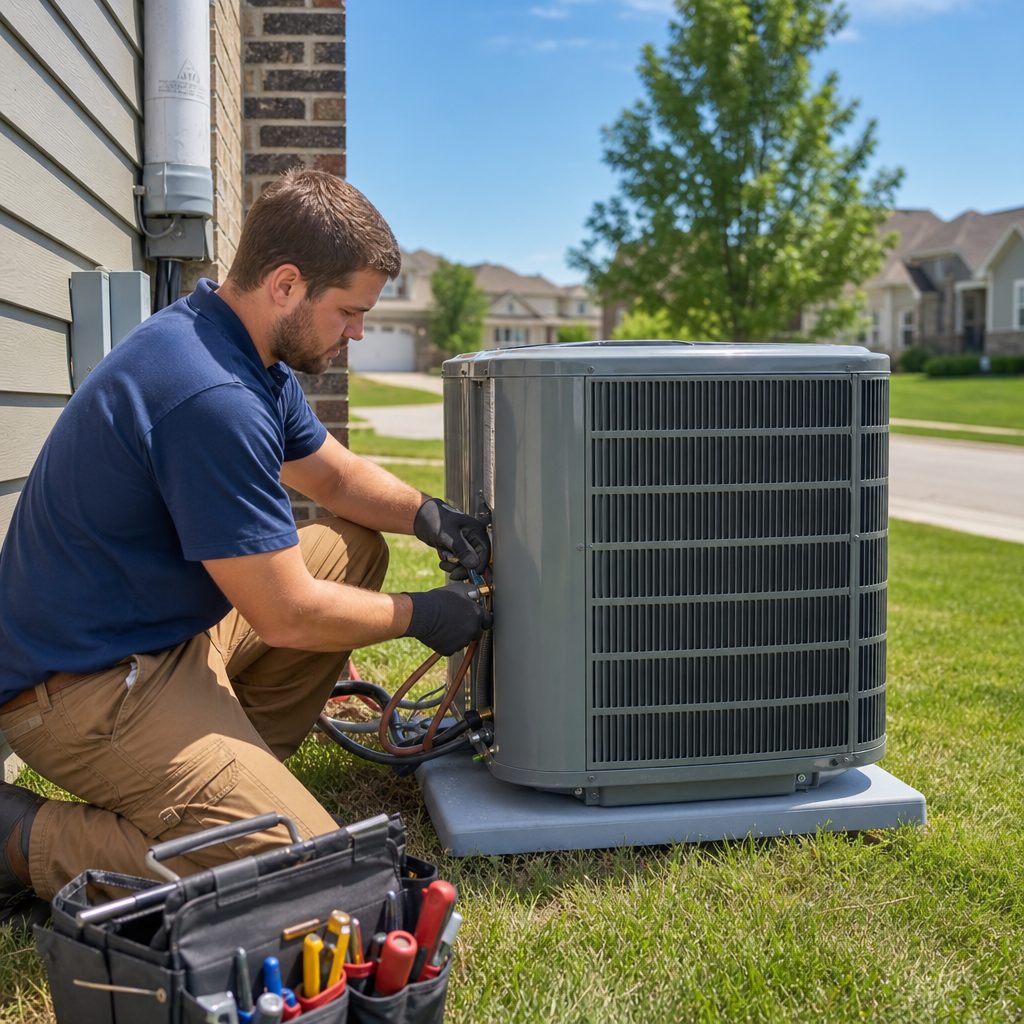
- The outdoor condenser unit — this is the large unit outside your home that releases the heat extracted from inside
Refrigerant cycles between the two, absorbing heat indoors and releasing it outdoors. Your existing ductwork distributes the cooled air throughout the house.
If you already have a furnace with ductwork, adding central air is a relatively straightforward process. If you’re starting from scratch, the project is larger — but still very manageable with the right contractor.
—
Sizing: The Step Most Homeowners Skip
Equipment sizing is the most critical part of a residential AC installation, and it’s where a lot of contractors cut corners.
An AC unit is sized in tons — one ton equals 12,000 BTUs of cooling capacity per hour. Common residential sizes range from 1.5 to 5 tons depending on home size, insulation, window exposure, and local climate.
Too small: The system runs constantly, can’t keep up on hot days, and wears out prematurely.
Too large: The system short-cycles — it cools quickly but shuts off before removing enough humidity, leaving your home feeling clammy and increasing wear on the equipment.
The right answer comes from a Manual J load calculation, which accounts for your home’s square footage, ceiling height, insulation levels, window orientation, and the specific climate conditions in Central Kansas. Any reputable HVAC contractor should perform one before recommending equipment.
—
What to Expect During Installation
A standard residential AC installation in El Dorado typically takes one full day for most homes. Here’s what the process looks like:
- Site assessment and equipment selection — your technician reviews your existing system, ductwork condition, electrical panel, and performs a load calc
- Equipment delivery and staging
- Old equipment removal (if replacing)
- Outdoor unit placement — set on a concrete pad or existing mounting surface, level and with proper clearance
- Indoor coil installation — connected to your air handler or furnace
- Refrigerant line set connection and brazing
- Electrical connections — dedicated circuit from your panel to the disconnect and unit
- System startup and testing — refrigerant charge verified, airflow checked, thermostat calibrated
- Walkthrough — your technician explains operation, filter maintenance, and what to watch for
At Don’s Heating & Air, same-day service is available across the El Dorado, Hillsboro, and Emporia area — so if you’re dealing with a failed system mid-summer, you’re not waiting days for a fix.
—
Equipment Brands and What They Mean for You
Brand matters — but not as much as the installing contractor’s workmanship. A premium system installed poorly will underperform a mid-tier system installed correctly every time.
That said, equipment quality does affect efficiency, reliability, and warranty coverage. Don’s installs Rheem and Mitsubishi systems, both of which carry strong reputations for residential durability and efficiency. Rheem is a proven workhorse for ducted central air systems; Mitsubishi leads in ductless mini-split applications when traditional ductwork isn’t feasible.
All installations through Don’s come with a 10-year system warranty — well above the industry standard — backed by $1M liability coverage and a licensed, insured team.
—
Cost Factors for Residential AC Installation
Residential air conditioning installation in El Dorado, KS typically runs $3,500–$8,000+ depending on:
- System size — larger tonnage = higher equipment cost
- Efficiency rating (SEER2) — higher efficiency models cost more upfront but save monthly
- Existing ductwork condition — repairs or modifications add cost
- Electrical upgrades — older panels may need a dedicated circuit added
- Line set length — longer runs between indoor and outdoor components cost more
The best way to get an accurate number is a free on-site quote. Ballpark figures from the internet can be off by thousands — your home is specific, and your quote should be too.
—
Why Experience Matters in Central Kansas
HVAC installation isn’t just mechanical work — it requires understanding local climate patterns, building codes, and the specific demands placed on systems in hot, humid Kansas summers.
Don’s Heating & Air has been doing this since 1959. That’s 65+ years of residential installs across Butler County and Central Kansas. When your technician has seen every configuration, every older home, and every edge case the region can throw at a system, it shows in the quality of the work.
—
Ready to Get a Quote?
If you’re planning a new AC installation or replacing aging equipment, the first step is an on-site assessment. Don’s offers free quotes with no pressure and no upsells.
Get a free quote or explore more about our air conditioning installation services to see what’s included.
Call or text us to schedule — same-day availability across El Dorado, Hillsboro, and Emporia.