
Indoor Air Quality Assessment: A Complete Guide
What Is an Indoor Air Quality Assessment?
Most homeowners spend a lot of time thinking about their heating and cooling bills — but not nearly enough time thinking about what they’re actually breathing. An indoor air quality (IAQ) assessment is a systematic evaluation of the air inside your home. It identifies pollutants, moisture problems, ventilation gaps, and other factors that directly affect your health and comfort.
If you’ve noticed persistent allergy symptoms, musty odors, excessive dust, or humidity swings in your home, an assessment isn’t just useful — it’s the right first step.
—
What Does an Indoor Air Quality Assessment Check For?
A thorough assessment looks at several categories of concern:
Airborne Pollutants
- Dust and particulate matter — includes pet dander, pollen, and fine particles from cooking or combustion
- Volatile organic compounds (VOCs) — off-gassed from paints, furniture, cleaning products, and building materials
- Carbon monoxide — a colorless, odorless gas produced by gas appliances, furnaces, and attached garages
- Mold spores — especially common in homes with humidity issues or past water damage
Humidity & Moisture
Relative humidity should stay between 30–50% indoors. Too high and you risk mold growth and dust mite populations. Too low and you get dry air that irritates airways, damages wood floors, and increases static electricity. Kansas homes swing hard in both directions depending on the season.
Ventilation
Tight, energy-efficient homes are great for your utility bills — but they can trap stale air, moisture, and contaminants inside. An assessment evaluates whether your home is getting adequate fresh air exchange.
HVAC System Condition
Your heating and cooling system is the lungs of your home. Dirty filters, clogged coils, leaky ductwork, or an aging system can all degrade air quality even if the unit is technically “working.” A professional indoor air quality service includes an evaluation of how your HVAC system is contributing to — or counteracting — air quality problems.
—
Signs You May Need an Indoor Air Quality Assessment
You don’t have to wait until someone gets sick. Watch for these warning signs:
- Allergy or asthma symptoms that worsen at home but improve when you leave
- Recurring headaches, fatigue, or eye/throat irritation with no clear cause
- Musty or chemical smells you can’t trace
- Visible mold or condensation on windows and walls
- A home that feels excessively dusty no matter how often you clean
- Recent renovation, new flooring, or fresh paint — all major VOC sources
- An HVAC system that hasn’t been serviced in a year or more
Central Kansas homeowners in El Dorado, Hillsboro, and Emporia face specific regional challenges: tight winters with sealed homes, humid summers that push moisture indoors, and older housing stock that wasn’t built with modern ventilation standards in mind.
—
What Happens During a Professional Assessment?
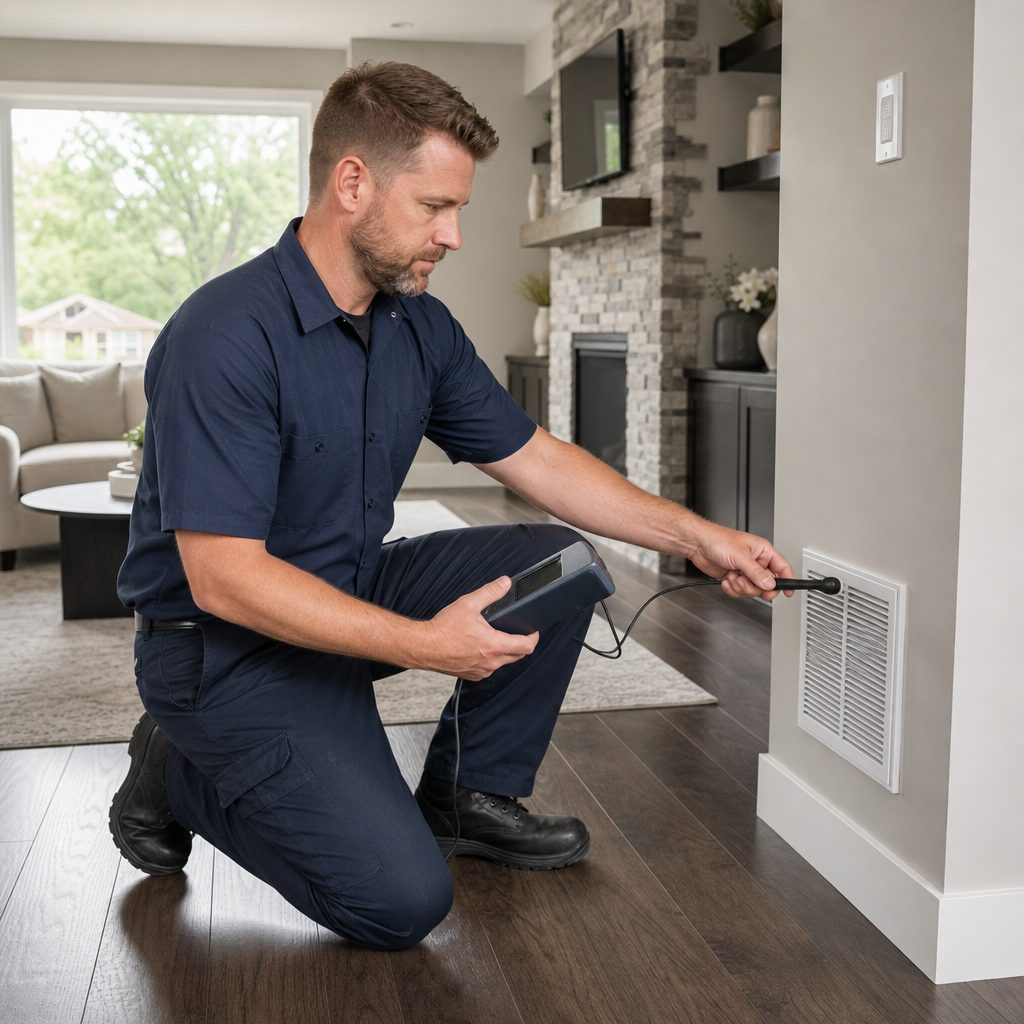
When a qualified HVAC technician conducts an IAQ assessment, here’s what to expect:
- Walkthrough and interview — The tech reviews your home’s layout, recent changes, known problem areas, and any symptoms you’ve noticed.
- Air sampling and testing — Using calibrated meters and sensors, they measure particulate levels, CO, CO₂, humidity, and sometimes VOCs.
- HVAC inspection — Filters, coils, ductwork, and equipment condition are all evaluated.
- Written findings — You get a clear picture of what’s elevated, what’s at risk, and what the sources are.
- Recommended solutions — This might include filtration upgrades, UV air purifiers, dehumidifiers, ventilation improvements, or duct cleaning.
—
What Can You Do to Improve Indoor Air Quality?
Depending on what the assessment finds, common solutions include:
- Upgrading to a higher-MERV filter — Standard 1-inch filters catch almost nothing. A thicker, higher-rated filter traps far more fine particles.
- Installing a whole-home air purifier or UV light — These address biological contaminants like mold spores and bacteria that filters alone can’t capture.
- Adding a whole-home humidifier or dehumidifier — Balances moisture year-round rather than relying on portable units.
- Duct sealing or cleaning — Leaky or dirty ducts recirculate contaminants throughout your entire home.
For a deeper look at your options, our indoor air quality guide walks through each solution in more detail.
—
Why Work With a Local HVAC Company?
Don’s Heating & Air has been serving Central Kansas homes since 1959. That’s over 65 years of understanding how homes in this region are built, how the climate behaves, and what actually causes problems here — not generic national advice written for homes in Atlanta or Seattle.
We offer free on-site quotes, same-day service across our coverage area, and $1M liability coverage on every job. Our team is licensed, insured, and 5-star rated on Google.
Ready to find out what’s in your air? Schedule a free quote or call/text us to set up an indoor air quality assessment. We’ll give you a straight answer and a clear plan — no upsells, no guesswork.